


Beyond Comfort Eating

A Trauma-Informed Look at Why We Eat and Alternative Paths to Self-Regulation
- by Stefan Freedman
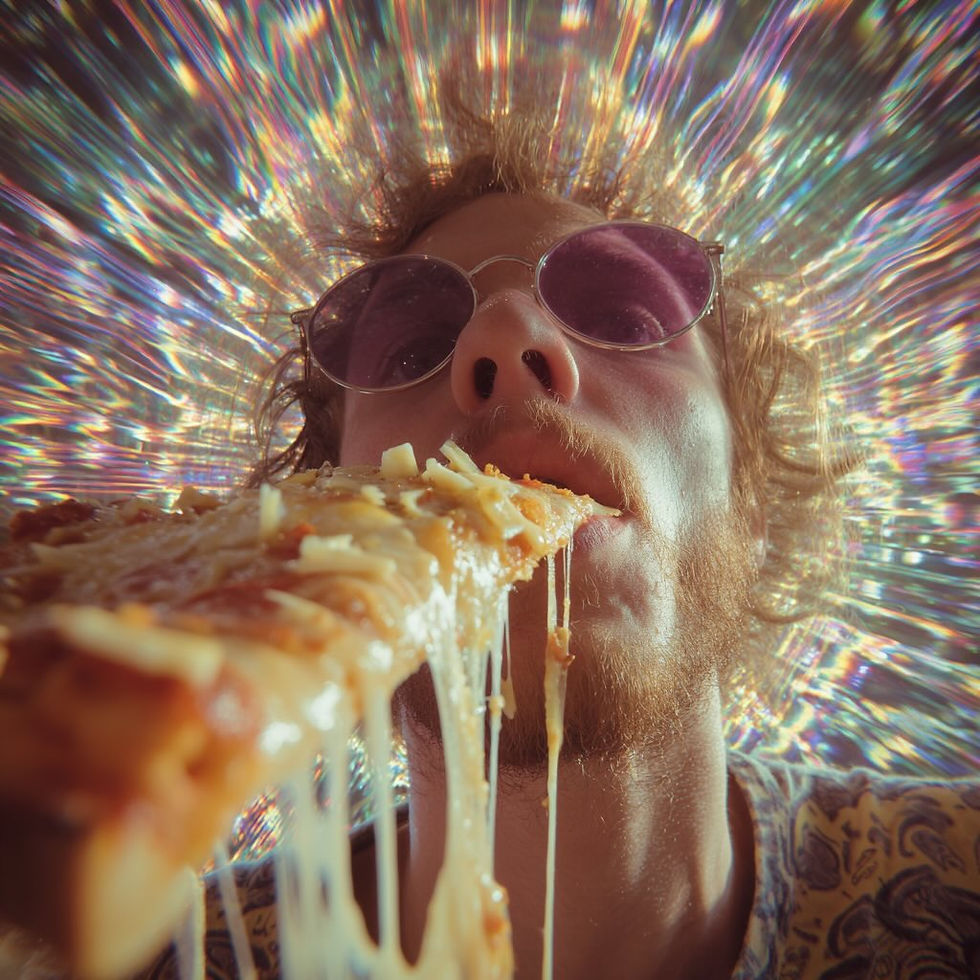
“Comfort eating” is a familiar phrase. It usually refers to the idea that people eat to soothe sadness or stress. But when we look more closely—especially through a trauma-informed lens—the picture becomes much more complex.
What is often called comfort eating may actually be a cluster of different nervous-system strategies, all using food as a tool for emotional regulation.
This blog arises not only from my general interest but because it has been a life-long pattern and is still an ongoing challenge for me. I relate this to early infancy trauma, having long periods without mother-contact.
Food as a regulator, not just a reward
Food is one of the most powerful regulators available to the human nervous system. It acts on several levels at once:
• Biological – influencing blood sugar, neurotransmitters, and hormones
• Emotional – producing pleasure, warmth, and satisfaction
• Sensory – taste, texture, fullness, and rhythm
Because it operates across these layers simultaneously, eating can quickly change how a person feels internally.
But the motivations behind eating are not always the same.
Not all “comfort eating” is about comfort
For some people, food is genuinely soothing. It softens loneliness or sadness and creates a feeling of warmth and care.
For others, however, eating serves different functions. It may help to:
• Reduce emotional intensity when feelings become overwhelming
• Create a sense of control when life feels chaotic
• Provide compensation when someone feels unfairly treated or disappointed
• Turn anger inward when it cannot safely be expressed outward
• Escape awareness through a trance-like state of distraction
In many cases several of these motives may operate at the same time. A single episode of eating can simultaneously provide pleasure, distraction, sedation, and a sense of reward.
The “consolation prize” effect
One under-discussed element is self-compensation.
When people feel misjudged, unlucky, overlooked, or emotionally deprived, food can become a private form of reward—a small way of restoring balance when life feels unfair.
The inner logic may sound like this:
“Today was difficult. I deserve something.”
Food becomes the low-effort reward: immediate, reliable, and entirely under one’s own control.
Early roots of food and safety
Another layer reaches back to infancy.
Feeding—especially breastfeeding—often occurs alongside warmth, touch, rhythmic breathing, and the release of bonding hormones such as oxytocin. For the infant nervous system, nourishment is intertwined with safety, closeness, and soothing.
Later in life, eating may unconsciously echo this early regulatory pathway. Warm, rich, or sweet foods can momentarily recreate sensations associated with care and protection.
A deeper question
When eating patterns are viewed only as problems of discipline or appetite, much of their deeper meaning is missed.
Very often, the behaviour represents the nervous system trying to answer a simple question:
How can I regulate what I am feeling right now?
Seen in this light, eating patterns are not merely habits or failures of willpower. They are adaptations—sometimes imperfect ones—to emotional and physiological stress.
Movement, music, and the body’s other regulators
If food can regulate the nervous system, it is not the only way. Humans also evolved to regulate themselves through movement and rhythm.
Walking, dancing, swaying, stretching, and moving to music all influence the same systems that food does. They can:
• release built-up emotional energy
• calm the nervous system through rhythm and breathing
• restore a sense of agency and control
• create pleasure and sensory satisfaction
• reconnect a person with their own body
Music and movement also have an advantage that eating does not: they allow emotional energy to move and resolve, rather than merely dampening or distracting from it.
A song can embody and soothe sadness.
A rhythmic pulse can discharge agitation.
A dance can express and disperse tension, anger or longing
Music and dance movements tend to uplift the mood, reducing levels of adrenaline and cortisol (stress related) and increasing seratonin, dopamine and oxytocin. In essence dancing produces free medicine for trauma-based discomfort.
In this way the body finds a healthy pathway to regulation—one that awakens sensation rather than dulling it.
Expanding the repertoire
The goal, then, is not to condemn comfort eating, which is a coping strategy, but to expand the range of ways the body can care for itself.
When people rediscover pleasure, expression, and rhythm through movement and music, they often find that the nervous system has many more ways to settle, release, and feel alive.
Food may still play its place in life. But it no longer needs to carry the whole burden of emotional regulation.
And that is where practices involving dance, movement and music become allies: offering the body ways to find comfort, expression, and even bliss—without the unwanted consequences that sometimes follow from seeking those things only at the table.


Comments